


Suffering from crippling pain you want to recover from quickly?
We’ve got exactly what you need.
We offer a wealth of resources for our patients so that they can perform the stretches and exercises they need to get better from the comfort of their home. Sometimes though, it becomes difficult to continue to do the movements continuously and correctly. We’ve heard your concerns, and so we’ve finally opened our new rehabilitation facility and gym, right next door to our physical therapy clinic.
At our training facility, you will have the personal attention and care from our licensed physical therapists in a one-on-one session. They are experts on pain relief and injury recovery, and can ensure you practice the right exercises and are performing them correctly for a speedy recovery.
New Wide Open Spaces
Take a peek inside our rehabilitation facility.
Located right next to our main clinic, the new space is spacious with tall ceilings so that you can feel free to stretch your legs.
Our rehab and training facility is stocked with common fitness equipment as well as much of what we have in our physiotherapy clinic. Most important of course is a physiotherapist that understands your symptoms, with the right knowledge to guide you on the exercises that will help you recover, as well as what to avoid so as not to worsen your condition.


Fitness Equipment Carefully Selected
by our Physical Therapists to suit every patient’s requirements.
After every session, we always make sure you have something to take home with you. We understand that you may want to see if you can help accelerate pain relief, so we offer guidance in the form of stretching and exercises you can perform at home.
While this works for most, some patients still have difficulty either due to a lack of space or equipment at home. That’s why we hope that with our new facility, we can help you out through one-on-one sessions where our therapists can give special attention to your problem areas. You’ll find we have equipment carefully picked out for their effectiveness at treating and mitigating pain, as well as common equipment you’d find in any gym – so that we can also advise you on how to use what’s available at your gym to aid with recovery.
Extracorporeal Shockwave Therapy (ESWT)
 | 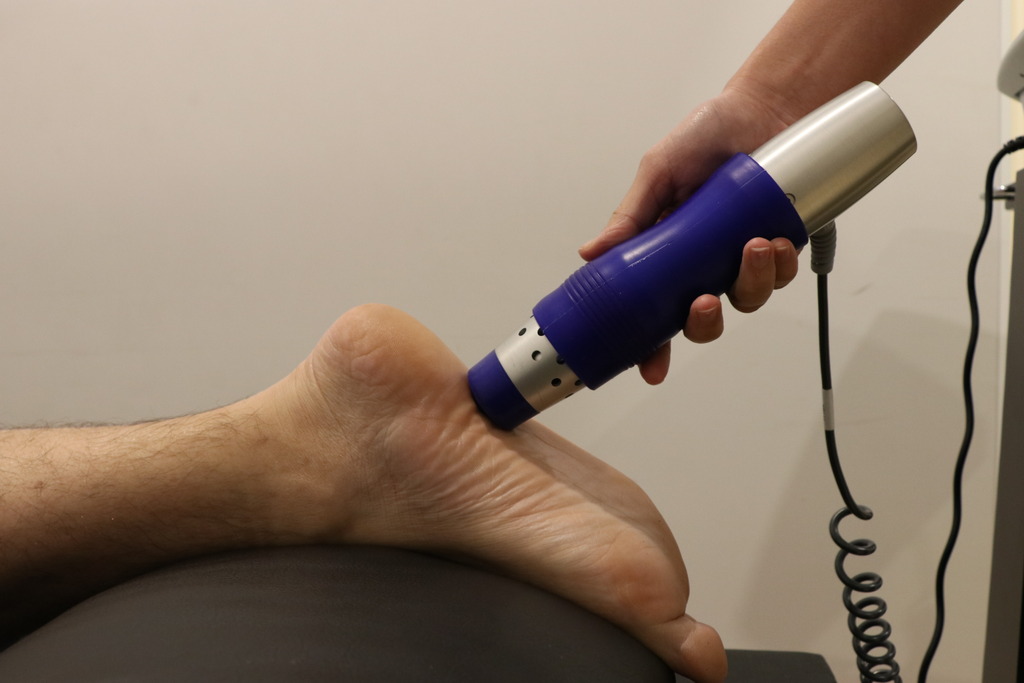 |
Extracorporeal shockwave therapy (ESWT) has become a popular therapeutic modality in the field of orthopedics for the treatment of many musculoskeletal disease, including problematic soft tissue injury which are rapid but short duration acoustic waves that carry energy and can pass through tissues. In contrast to ESWL, the application of shockwaves in orthopedics can be beneficial due to their ability to cause interstitial and extracellular responses which lead to tissue regeneration. In general, ESWT bears positive effects in the management of cartilage and bone disorders. it is believed that ESWT promotes healing via mechanotransduction. Reportedly, biological responses include tissue regeneration, wound healing, angiogenesis. Previous investigations have suggested that mechanotransduction seems to be the major mechanism whereby ESWT triggers angiogenic and tissue regeneration responses at cellular and molecular levels, generating beneficial therapeutic effects.
- Consultation: Discuss the patient’s problems and symptoms.
- Explain Benefits: Inform the patient about the benefits of shock wave therapy, the sensations during the procedure, and how they may feel afterward.
- Identify Trigger Points: Locate the painful or tender spots.
- Start Treatment: Set the time and intensity of the machine.
- Apply Shock Wave: Place the shock wave head on the tender spot and begin treatment.
- Adjust Power: Adjust intensity based on patient comfort.
- End Treatment: After the session ends, turn off the machine and evaluate the patient’s response.
- Explain Aftercare: Inform the patient about potential soreness and advise them to apply cold compresses if needed.
This therapy has shown promising results in the treatment of:
- Musculoskeletal disorders
- Office syndrome
- Tendinitis
- Epicondylitis
- Plantar fasciitis
- Trochanteritis
- OA knee
biological effects of treatment, including
- Pain relief
- Tissue regeneration
- Vascularization
- Chondroprotection
Transfer Energy Capacitive And Resistive (TECAR)
 |  |
Transfer energy capacitive and resistive (TECAR) therapy to reduce musculoskeletal pain. TECAR therapy employs high-frequency electromagnetic waves and reduces activity-induced spasms and contractions, improves blood flow, and helps muscle oxygenation via hemoglobin activation. Hence, TECAR therapy enhances the body’s natural ability to repair tissues and reduce pain results in decreasing pain and improving function in different musculoskeletal diseases such as low back pain, Achilles tendinitis , the patellar, and the wrist extensor . Its capability to affect the blood flow, as a consequence of its thermal effect, is commonly considered one way in which TECAR supports the healing processes of injured/dysfunctional tissues
- Consultation: Discuss the patient’s problems and symptoms.
- Explain Benefits: Inform the patient about the benefits of the TECAR machine, what to expect during treatment, and how they may feel after.
- Start the Treatment: Place the pad in contact with the patient’s skin.
- Adjust Settings: Set the time and temperature as needed.
- Apply Oil: Pour an adequate amount of oil onto the area to be treated.
- Use the Probe: Place the probe on the patient’s skin and move it over the treatment area.
- Monitor Temperature: Frequently ask if the temperature feels too hot. It should feel warm to hot but comfortable.
- End Treatment: Once the treatment time ends, clean the patient’s skin with alcohol to remove any oil.
- Store Equipment: Remove the pad and turn off the machine.
- Post-Treatment Check: Assess the patient’s condition after the treatment.
This therapy has shown promising results in the treatment of:
- Acute or chronic inflammation
- Muscle spasms
- Joint pain
- OA knee
- Low back pain
biological effects of treatment, including
- Anti-edema
- Anti-inflammatory
- Muscle relaxant
- Paravertebral, endorphin secretion
- Increasing cellular metabolism
Ultrasound Therapy
 |  |
Ultrasound therapy is an electrotherapy which has been used in physiotherapy practices for many years. It is mainly used for the high frequency sound waves that cause vibrations and movement of cellular fluids. Ultrasound can provide deep heating to soft tissue structures in the body. Deep heating tendons, muscles, or ligaments have benefits like increased circulation to tissues, speeding the healing process, leading to a decrease in pain, and increasing elasticity.
While receiving an ultrasound treatment, you will most likely not feel anything happening, except perhaps a slight warming sensation or tingling around the treatment area.
- Consultation: Discuss the patient’s problems and symptoms.
- Explain Benefits: Inform the patient about the benefits of combined ultrasound therapy, what they may feel during the session, and after the treatment.
- Start Treatment: Set the machine time and attach the vacuum electrodes near the treatment area.
- Apply Gel: Squeeze ultrasound gel onto the ultrasound head.
- Apply Ultrasound: Place the ultrasound head onto the treatment area and scan over the skin.
- Set Frequency: Adjust the ultrasound settings based on the injury phase (Acute, Subacute, Chronic). Hold the head perpendicular to the skin for deeper penetration.
- Electrical Stimulation: Turn on electrical current (High voltage, TENS, IF) until the patient feels a comfortable sensation. The intensity can be increased during the treatment.
- Increase Intensity (Optional): If the patient becomes used to the current, gradually increase the intensity.
- End Treatment: Wipe off gel using alcohol and tissue.
- Post-Treatment Check: Assess how the patient feels after the treatment.
This therapy has shown promising results in the treatment of various
- Bursitis (inflammation in the fluid-filled sacs along joints)
- Tendonitis
- Muscle strains and tears
- Frozen shoulder
- Sprains and ligament injuries
- Joint contracture or tightness
biological effects of treatment, including
- Increase blood flow to an area in order to accelerate the resolution time of the inflammatory process.
- Stimulate the production of collagen (the main protein in tendons and ligaments) during tissue healing.
- Speed up healing process
High-voltage Galvanic Stimulation (HVGS)
 |  |
High-voltage galvanic stimulation (HVGS) uses high-voltage and low-frequency electricity to penetrate deep into tissues. It is used to relieve pain, improve blood flow, relieve muscle spasm, and improve joint mobility edema and post-traumatic pain .This type of current is characterized by a twin-spike, monophasic waveform, generating a voltage greater than 150V and a low total current (1.5 mA), with very short duration (5-100μs) and greater interpulse intervals. These characteristics allow HVPC to generate little or no electrochemical reactions between the skin and the stimulation electrodes, causing a comfortable sensation.
- Consultation: Discuss the patient’s problems and symptoms.
- Explain Benefits: Inform the patient about the benefits of electrical stimulation, how they will feel during treatment, and after.
- Start Treatment: Place the vacuum electrodes near the treatment area.
- Adjust Settings: Turn on the electrical current (High voltage, TENS, IF) until the patient feels a strong but comfortable sensation. Increase intensity if needed.
- Monitor Comfort: Throughout the treatment, check that the patient is comfortable. You may increase the intensity as the patient gets used to it.
- End Treatment: Turn off the vacuum and check the patient’s condition post-treatment.
biological effects of treatment, including
- Reduce pain
- Increased local bloodflow
- Reduce muscle spasm
Peripheral Magnetic Stimulation (PMS)
 |  |
Peripheral magnetic stimulation (PMS) or transcutaneous magnetic stimulation is a method of delivering a rapidly pulsed, high-intensity magnetic field to the targeted area.The magnetic field provides many advantages. Such as the magnetic field can pass any medium, even a vacuum space, without attenuation of energy. This allows penetration to deep tissue such as spinal nerve roots or deep muscles. Owing to this characteristic, no mechanical contact is necessary, making it applicable to patients with hypersensitivity. The magnetic field can pass through clothing, the patient does not need to undress. peripheral magnetic stimulation can recruit peripheral afferents, potentially influencing cerebral activation and neuroplasticity. Peripheral magnetic stimulation is thought to be another useful method to induce proprioceptive afferents resembling movement therapy that has already been demonstrated to increase motor control in stroke patients.There are many applications such as spasticity reduction, strength improvement, and pain control
- Consultation: Discuss the patient’s problems and symptoms.
- Explain Benefits: Inform the patient about the benefits of PMS therapy, how it will feel during treatment, and after.
- Start Treatment: Set the time, pulse duration, and pause intervals.
- Apply PMS: Place the PMS head onto the treatment area.
- Adjust Intensity: Gradually increase the intensity based on the patient’s comfort level. It should feel strong but not painful.
- Monitor Comfort: Increase the intensity if the patient becomes accustomed to the current.
- End Treatment: Turn off the machine and assess the patient’s condition post-treatment.
This therapy has shown promising results in the treatment of various
- Myofascial Pain Syndrome
- Traumatic Brachial Plexopathy
- Post-traumatic Peripheral Neuropathic Pain
- Acute and chronic Low Back Pain
- Spasticity Reduction
High Powered Laser Therapy
 |  |
Lasers are one of the most convenient and effective tools for musculoskeletal diseases. Laser therapy can reduce inflammation as well as muscle fatigue and pain. The decrease in inflammation combined with the increase in comfort allows for a therapist to move the joint around using manual therapy more easily and with more comfort for the patient, than without first having the laser treatment. Laser therapy can treat a diseases located in almost every area of the patient’s body such as severe pain, wound healing, anti-inflammatory and anti-edema effects. This type of therapy allows not only to alleviate the symptoms connected with pathological changes in tissues but also to effectively treat their causes.
- Consultation: Discuss the patient’s problems and symptoms.
- Explain Benefits: Inform the patient about the benefits of laser therapy, how they will feel during the session, and after.
- Adjust Settings: Set the time and intensity depending on the injury phase (Acute, Subacute, Chronic).
- Apply Laser: Scan the laser head over the treatment area, ensuring it is perpendicular to the skin for optimal penetration.
- End Treatment: Turn off the machine once the session is complete.
- Post-Treatment Check: Assess the patient’s response and provide feedback.
This therapy has shown promising results in the treatment of:
- Osteoarthritis of the knee, hip and ankle
- Rheumatoid arthritis
- Shoulder impingement syndromes
- Hip or shoulder bursitis
- Low back disc degeneration
- Disc herniation
- Sciatica
- Tendonitis
- Tennis elbow
- Plantar fasciitis
- Sprain
- Tenosynovitis
- Trigger finger
Stuck at home? Check out our home exercise video series.
Instructed by our own physical therapists, the stretches and exercises in this series are sure to help provide pain relief and improve your flexibility, all while giving you a good workout.

Not Sure Where to Begin?
Start with an In-Depth Posture Report at Our Clinic.
At our clinic, we have special equipment that allow us to help assess irregularities that may occur in your spine, as well as licensed physiotherapists trained to use it. We’ve found our Posture Report helps a lot as our patients are able to understand through the visual aid any issues with their back and spine, where other methods for visualization may fail.
Here is an example of one such reports. You can click on it to zoom in.
Join Pain Away’s Group weekly classes led by our Therapists
Simply reserve by contacting us at 02-258-1361 or 086-333-6877.


Our manual treatment can help relieve pain and improve mobility, but to help strengthen your muscles so you can keep a better posture long-term, try our classes (Asok branch only).
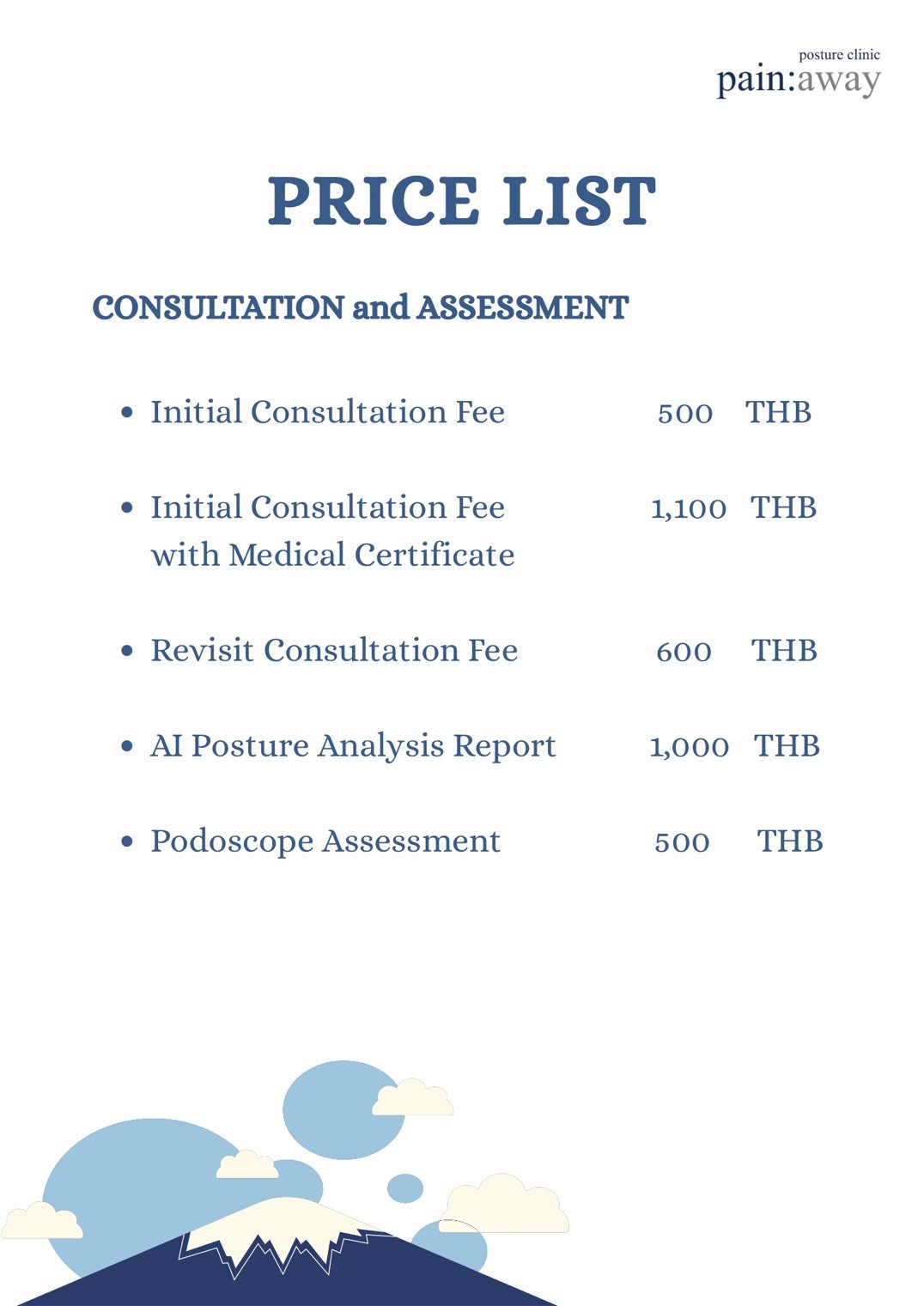
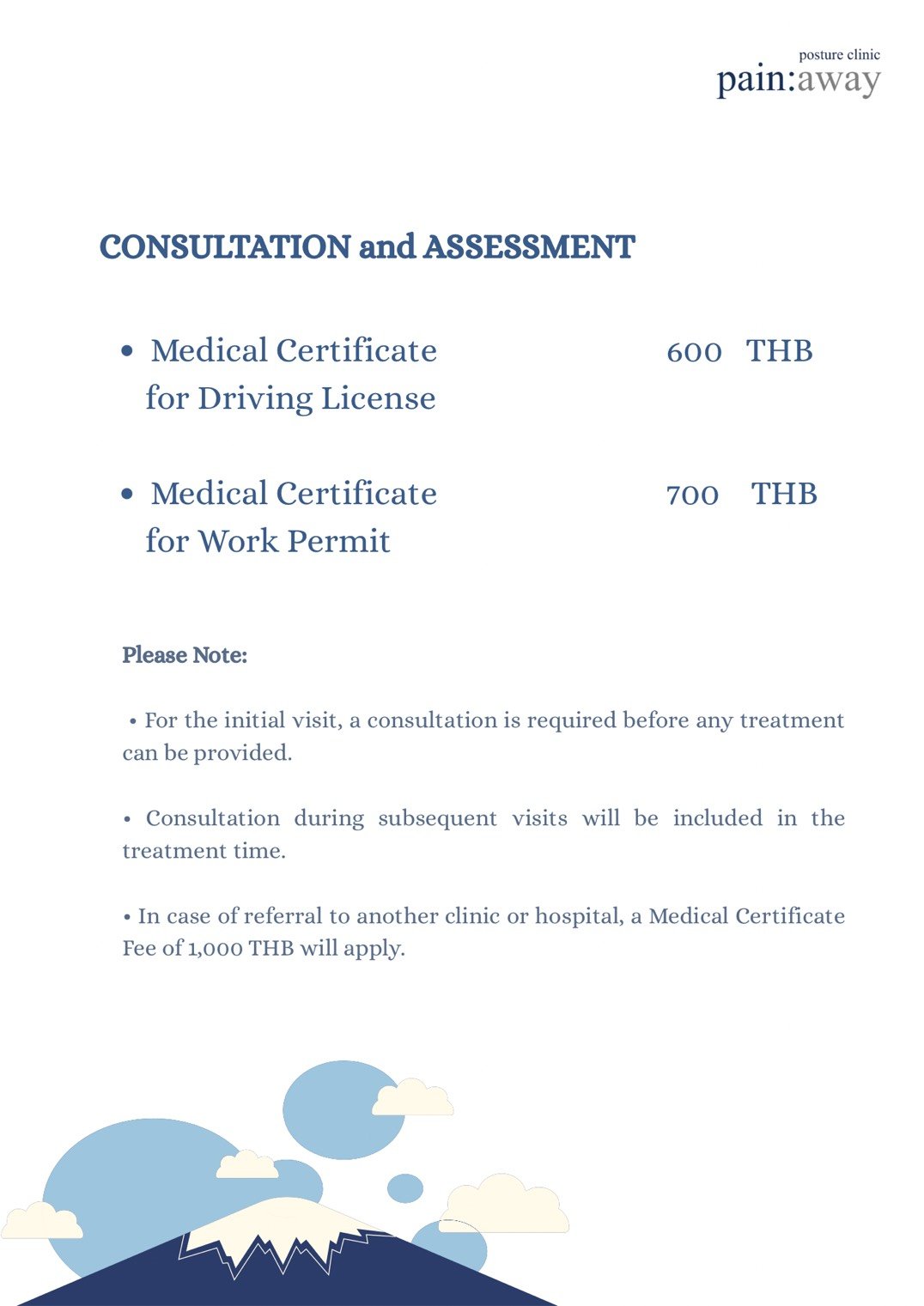
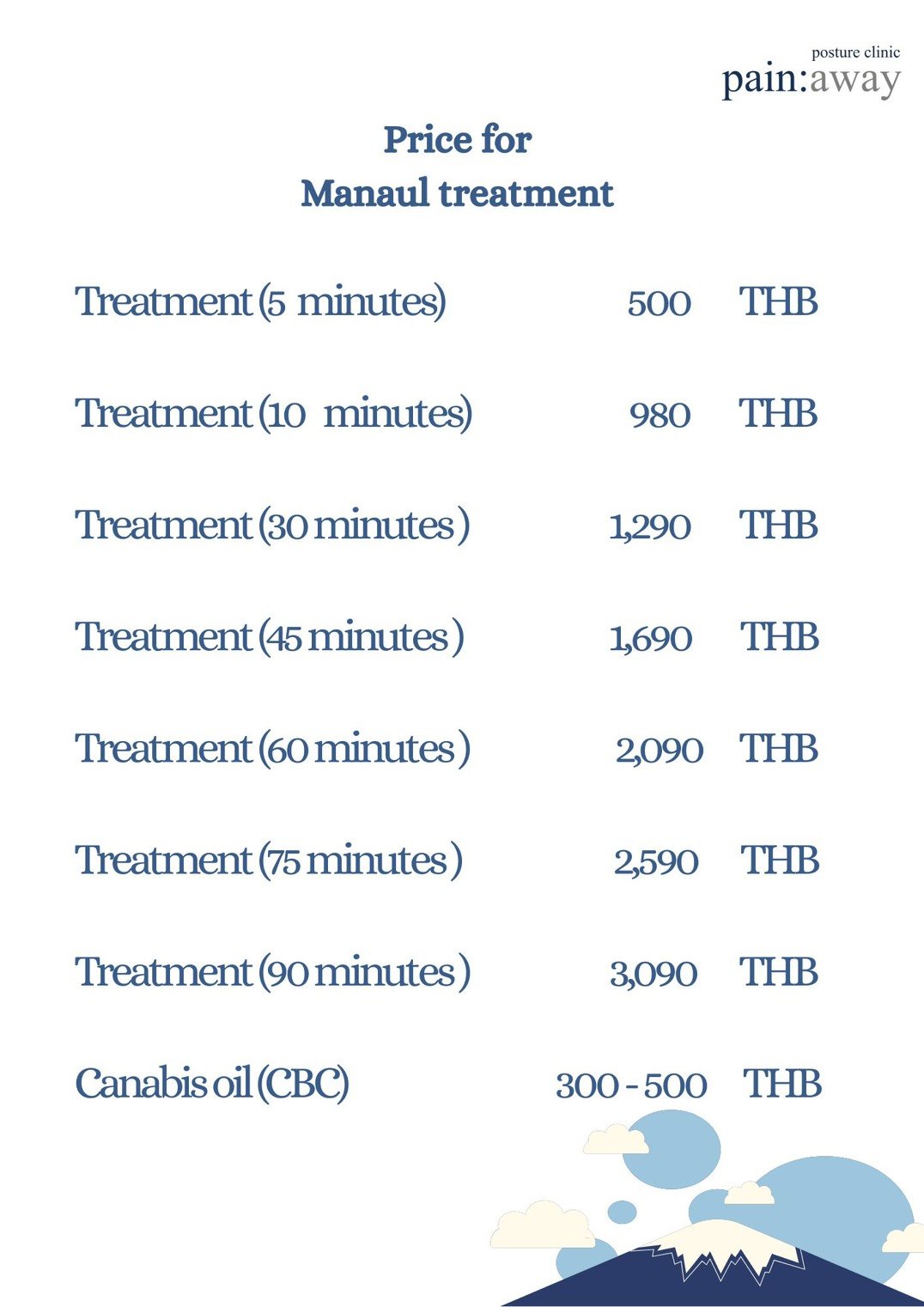
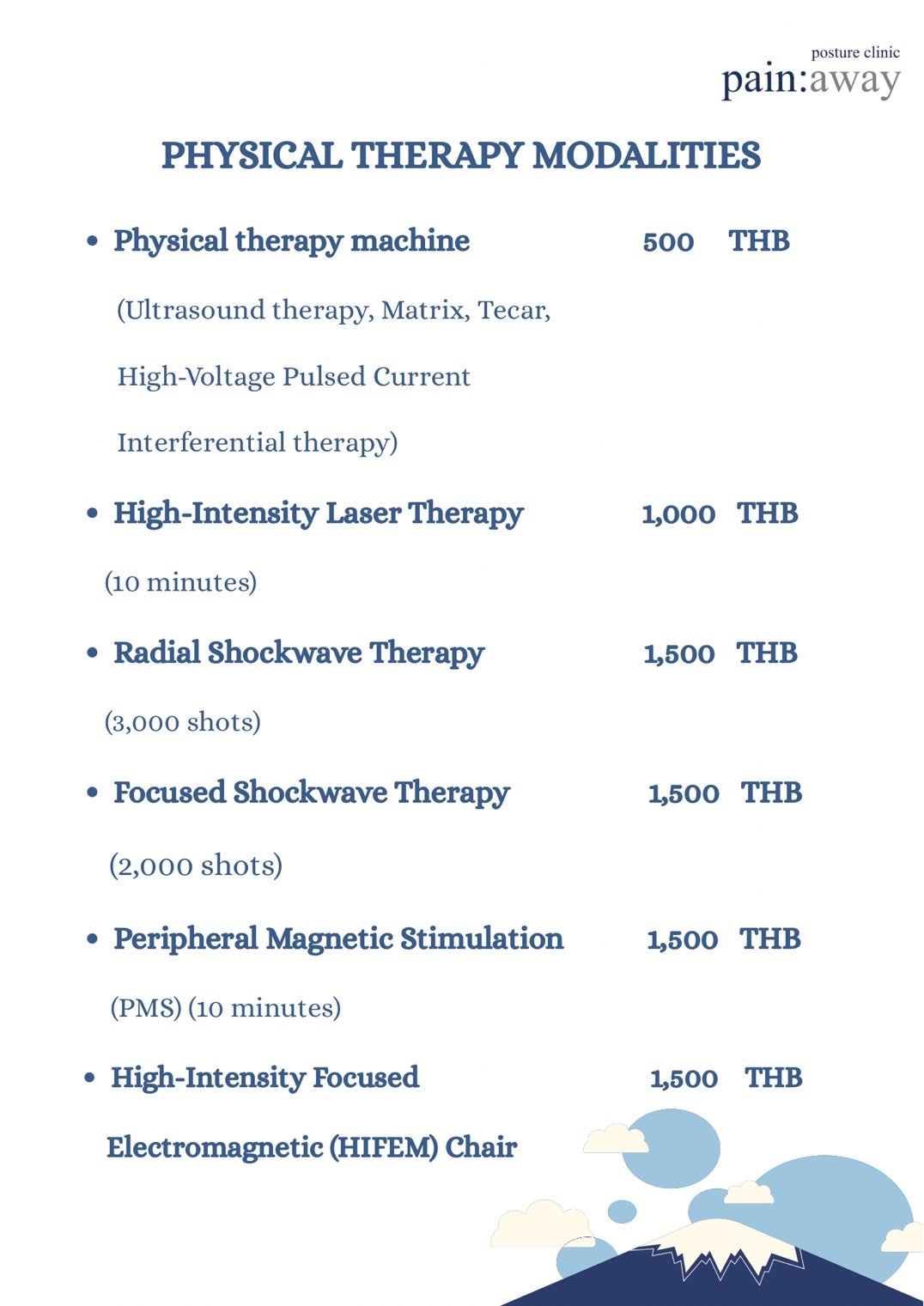
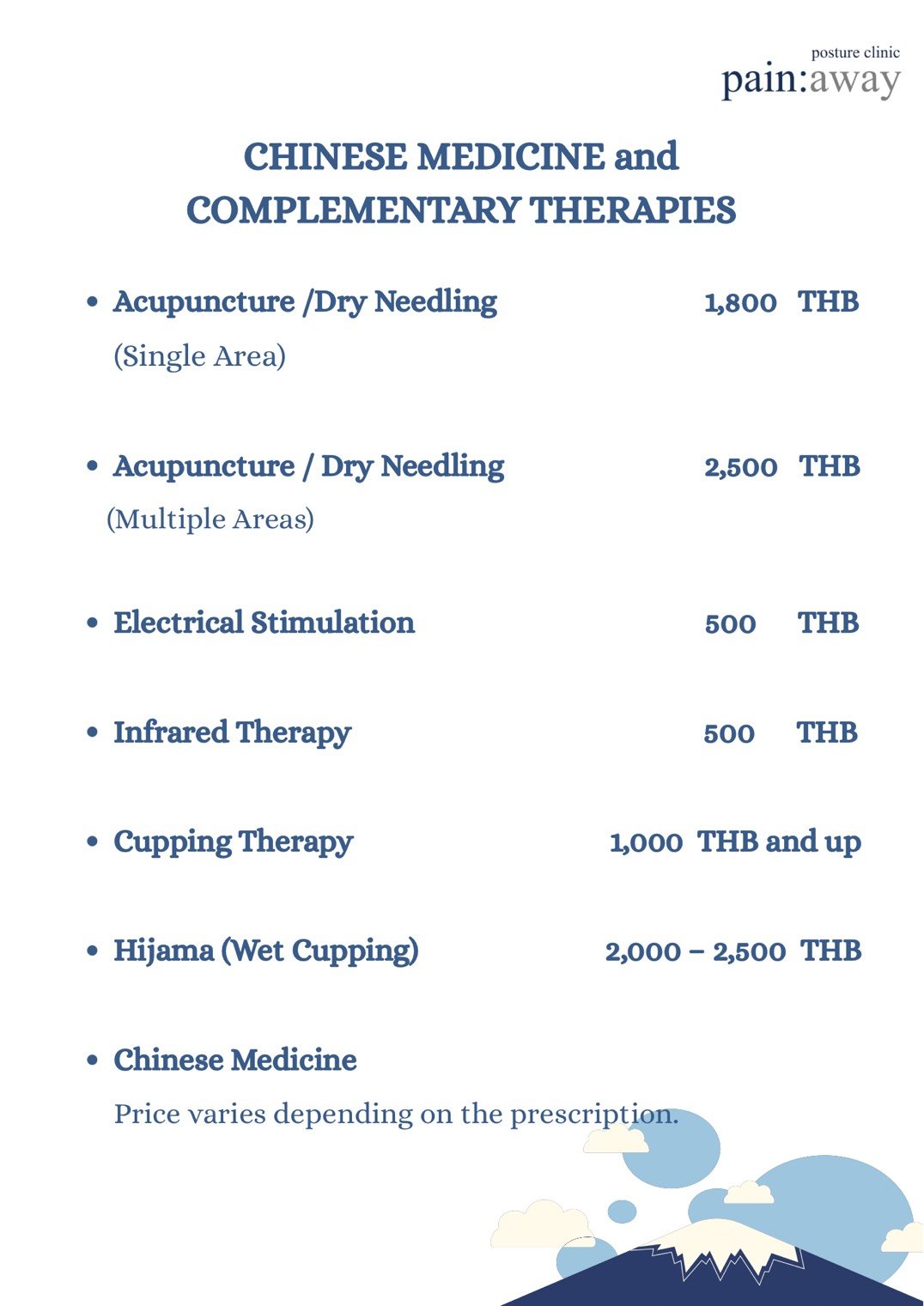
Treatment Pricing
Physical Therapy Treatment starts at 1,500-3,000 THB | Doctor fee (for insurance) is 600 THB
Frequently Asked Questions (FAQs)
How many rehabilitation sessions will I need?
Why does my injury or pain keep coming back?
Can hands-on treatment and exercise rehabilitation be combined?
Can physiotherapy and rehabilitation help me avoid surgery?
Trusted
With over 15 years of combined experience treating Back Pain and providing Pain Relief in Bangkok, we at Pain Away are your most trusted friends.
Reliable
Our 94% success rates speak for themselves. You won’t leave unsatisfied with the care we put into our physiotherapy and pain treatments.
Safe
All of the treatments we practice are 100% derived from both medical and alternative forms of health.

Need a Medical Certificate for Insurance?
We’ve got you covered.
(Our doctor is in-house Thu-Mon to provide one)


